
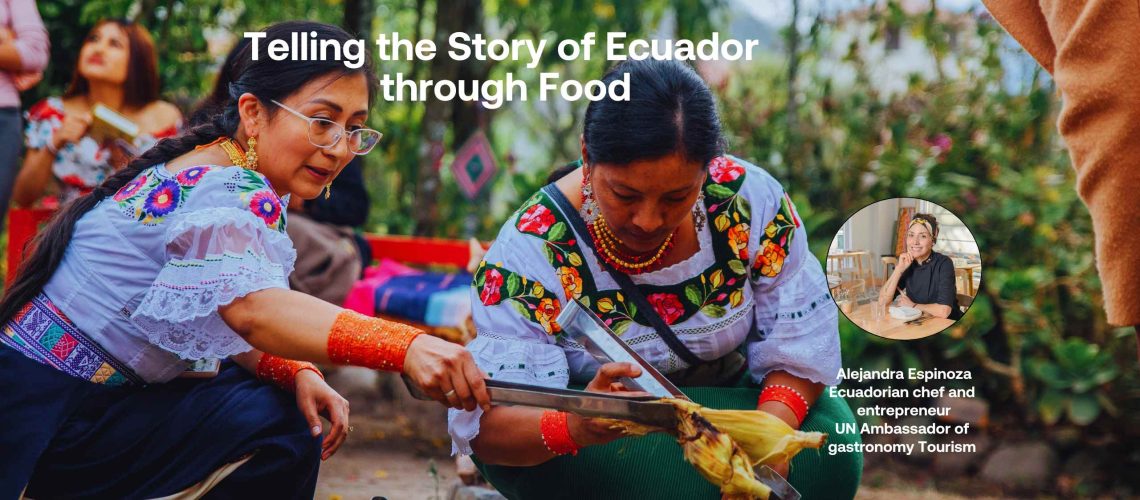
Telling the Story of Ecuador Through Food
How gastronomy, biodiversity, and rural communities are shaping a more sustainable future for tourism. Introduction My vision has always been simple: to tell the story of Ecuador through its food. As a chef, I have never seen gastronomy as simply what happens in a restaurant. Food is one of the most powerful ways we can share who we are as a country. Through every ingredient, recipe, and meal, we can tell stories about our landscapes, our cultures, our biodiversity, and the people who have protected these treasures for generations. Ecuador is a small country, but it is one of the most biodiverse places on Earth. Within a few hours, you can travel from the Pacific Coast to the Andes and then into the Amazon, discovering entirely different ecosystems, cultures, and flavors. This richness is reflected in our food, making gastronomy one of the most authentic ways to experience Ecuador. Throughout my journey with Cotoa and my work with Somos, I have come to believe that gastronomy can do much more than delight people. It can strengthen rural communities, create opportunities for local producers, support conservation efforts, and inspire travelers to discover our country through meaningful experiences.
The Real Heroes Behind Ecuadorian Gastronomy
When people think about gastronomy, they often think about chefs. But the true heroes of Ecuadorian food are found far beyond restaurant kitchens. They are the cacao farmers preserving heirloom varieties on the coast. They are the Indigenous communities of the Amazon safeguarding native fruits and ancestral knowledge. They are the families in the Andes cultivating crops that have fed generations and continue to shape our culinary identity. Every ingredient has a story, and every story begins with people. Over the years, I have had the privilege of meeting producers across Ecuador who dedicate their lives to protecting our biodiversity and cultural heritage. Their knowledge is invaluable. They understand their territories, the rhythms of nature, and the traditions that make each ingredient unique. For travelers, meeting these communities transforms a meal into something much more meaningful. Food becomes a connection to place, culture, and identity. It becomes a way of understanding Ecuador through the people who make it extraordinary.
Biodiversity as a Pathway to Sustainable Tourism
I often say that Ecuador won the lottery of nature. Few countries possess such extraordinary biodiversity within such a compact territory. From native cacao and Amazonian fruits to Andean grains and coastal seafood, our ecosystems offer an incredible diversity of ingredients that cannot be found anywhere else. But biodiversity is not only a source of culinary inspiration. It is also a powerful opportunity for sustainable development. When local ingredients are valued, communities benefit. When travelers seek authentic food experiences, they create demand for local products. And when producers are fairly recognized for their work, they gain incentives to continue protecting the ecosystems that sustain them. This is why I believe gastronomy and tourism are natural allies. Together, they can create economic opportunities while encouraging the conservation of both cultural and natural heritage.
Creating Connections Through Food
The travelers of today are looking for more than beautiful destinations. They are looking for stories, authenticity, and human connection.
Food creates those connections naturally.
A visitor who walks through a cacao farm, learns about an ancestral ingredient, or shares a meal prepared by a local family experiences something that cannot be replicated anywhere else. These moments create lasting memories because they connect people directly to a territory and its culture.
My hope is that every dish can become an invitation to discover Ecuador.
When someone tastes Ecuadorian cacao, I want them to become curious about the forests where it grows. When they experience Amazonian ingredients, I want them to learn about the communities that protect them. When they enjoy a traditional recipe, I want them to understand the history and culture behind it. If we tell these stories well enough, people will not only want to consume our products—they will want to visit our communities, explore our landscapes, and experience Ecuador for themselves. A Vision for Ecuador My vision for Ecuador is one where gastronomy serves as a bridge between people, places, and opportunities. I want the world to recognize Ecuador not only for its biodiversity, but also for the people who have preserved it. I want rural communities to benefit from the growing interest in our food and culture. I want young generations to see value in continuing traditions that connect them to their territories. Most importantly, I want gastronomy to help strengthen all the ecosystems that make Ecuador unique. When local products are celebrated, demand grows. When demand grows, opportunities are created. And when communities can prosper through sustainable economic activities, there are greater incentives to protect biodiversity and preserve cultural heritage. Food has the ability to create a virtuous cycle—one that benefits travelers, producers, communities, and ecosystems alike.
Conclusion
For me, gastronomy has never been only about food. It is about storytelling. It is about creating connections. It is about helping people understand the extraordinary richness of Ecuador through one of the most universal human experiences: sharing a meal. Every ingredient carries the story of a place. Every producer carries generations of knowledge. Every dish has the power to inspire curiosity and connection. If we continue using gastronomy as a way to tell the story of Ecuador, we can create a future where tourism supports rural communities, strengthens local economies, protects biodiversity, and invites the world to discover our country in a deeper and more meaningful way. Because when people fall in love with our food, they begin to fall in love with Ecuador itself. Alejandra Espinoza- is an Ecuadorian chef, entrepreneur, and advocate for sustainable tourism and gastronomy. As founder of Cotoa, she led the first Ecuadorian restaurant to be recognized by the Michelin Guide with a Bib Gourmand distinction, helping place Ecuadorian cuisine on the global gastronomic map and opening doors for future generations of Ecuadorian chefs. Through her work with Cotoa and Somos, she has dedicated her career to elevating Ecuador’s native ingredients, local producers, and culinary traditions. She promotes a vision in which gastronomy serves as a bridge between biodiversity, cultural heritage, and economic opportunity—inviting the world to discover Ecuador through its people, landscapes, and flavors while creating lasting value for the communities that protect them.
About the Author:
Alejandra Espinoza- is an Ecuadorian chef, entrepreneur, and advocate for sustainable tourism and gastronomy. As founder of Cotoa, she led the first Ecuadorian restaurant to be recognized by the Michelin Guide with a Bib Gourmand distinction, helping place Ecuadorian cuisine on the global gastronomic map and opening doors for future generations of Ecuadorian chefs. Through her work with Cotoa and Somos, she has dedicated her career to elevating Ecuador’s native ingredients, local producers, and culinary traditions. She promotes a vision in which gastronomy serves as a bridge between biodiversity, cultural heritage, and economic opportunity—inviting the world to discover Ecuador through its people, landscapes, and flavors while creating lasting value for the communities that protect them.