
Between Totora and Ancestral Plants: Artisanal Tourism in San Rafael de la Laguna, Ecuador
Challenges
The San Rafael de la Laguna’s Kichwa community preserves a living heritage grounded in the cultivation and use of totora reeds and ancestral plants for craft, architecture, and community well-being. Yet the relationship between the preservation of cultural knowledge and local economic development has been fragile. Traditional crafts have been underutilized and under-compensated, with limited access to markets, scarce training in marketing and branding, and few structured tourism experiences that translate everyday practices into viable revenue streams.
Conversely, if traditional practices are revalued through participatory design, craft innovation, training and experiential routes, they can anchor inclusive micro‑enterprise development, strengthen cultural conservation, and reinforce community pride and identity.
Results
The initiative “Entre Totora y Plantas Ancestrales” responds to these realities by aligning cultural stewardship with market-facing experiences, empowering women and youth with practical skills, and building a tourism route that invites visitors to engage with nature, workshops, and stories in ways that sustain heritage and unlock equitable local opportunity.
The initiative’s design begins with participatory community consultation that maps tourism priorities, assets, and barriers from the perspective of elders, artisans, women, and youth.
Following initial consultations, a capacity building programme was designed around practical, market relevant competencies, with training focused on marketing, craft innovation, and tourism management. The programme engaged 500 direct beneficiaries, with a deliberate emphasis on the inclusion of women and youth given their central roles in community life. Among them are 200 women, many of whom work as totora reed artisans or medicinal plant producers; 150 youth, participating as cultural guides, digital entrepreneurs, and tourism managers; and 150 men, contributing their experience as farmers, artisans, and workers in logistics and infrastructure.
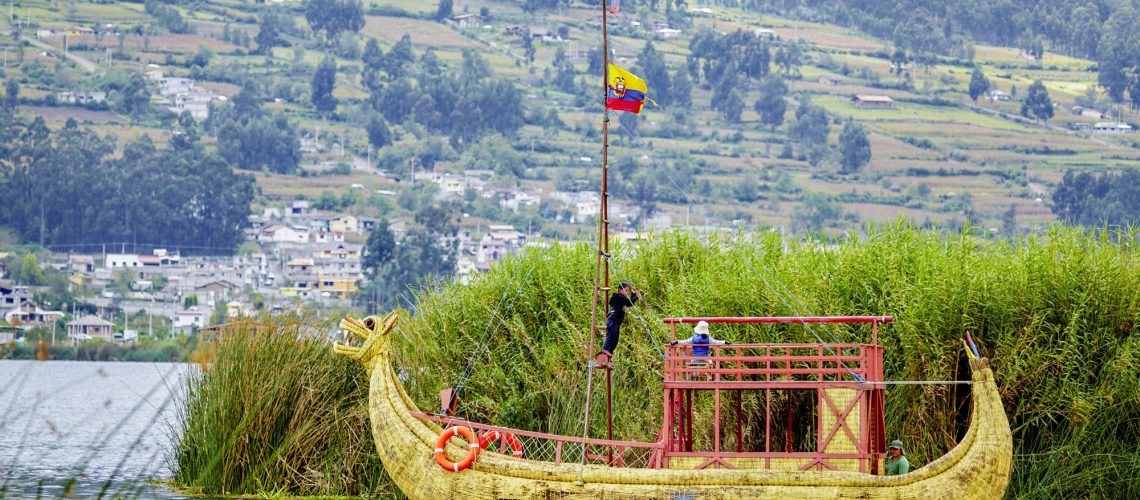
An experiential tourism route was developed as the initiative’s public interface. It connects visitors with nature, totora wetlands and plant plots, then moves into artisan workshops and community spaces where creation, learning, and exchange occur.
For example, the construction of the Totora Cube1, a celebrated community-built structure using ancestral materials and techniques demonstrates how traditional knowledge coupled with skill development can inform contemporary design.
Its recognition at the 20th Pan‑American Architecture Biennial Quito (BAQ 2016) in Category C brings visibility and legitimacy, linking craftsmanship to regional architecture discourse and positioning San Rafael De Laguna’s work within a broader design ecosystem.
Economically, the route and associated product lines generate new income streams, support micro-enterprise formation, and create a strong incentive for youth employment. Socially, participation consolidates community cohesion and intergenerational transmission, elevates women’s leadership, and reinforces Kichwa culture and narratives. Environmentally, stewardship practices that accompany the route strengthen biodiversity and wetland wellbeing, aligning livelihoods with conservation.
Lessons Learned
San Rafael de la Laguna’s experience demonstrates that tourism is enabled when community-led approaches govern both the narrative and the business model.
This case highlights the importance of linking capacity building directly to application. Training in marketing, craft innovation, and tourism management translated into tangible outcomes through the experiential route and diversified product lines.
Women and youth leadership emerged as a decisive factor, accelerating adoption of tourism practices, strengthening marketing and craft innovation, and ensuring that benefits flowed to households central traditional craftmaking.
However, the process also revealed several constraints that shaped the project’s trajectory. Limited initial engagement and weak articulation among local actors slowed the design of the tourist route, underscoring the need for stronger coordination mechanisms at the outset. A deficit of continuous financial resources generated delays in infrastructure development and promotional activities, demonstrating the importance of reliable funding streams for sustained growth.
In San Rafael de la Laguna, this integrated approach demonstrates how cultural heritage, when activated through community ownership and supported by targeted skills and partnerships, can sustain livelihoods while safeguarding identity and ecological balance.
- Franco, J. T. (2016, December 28). The Totora Cube investigates the techniques of Incan‑era craftsmanship. ArchDaily. https://www.archdaily.com/802481/the-totora-cube-investigates-the-techniques-of-incan-era-craftsmanship
Explore more practices
Discover how other Best Tourism Villages are driving rural development through tourism.