
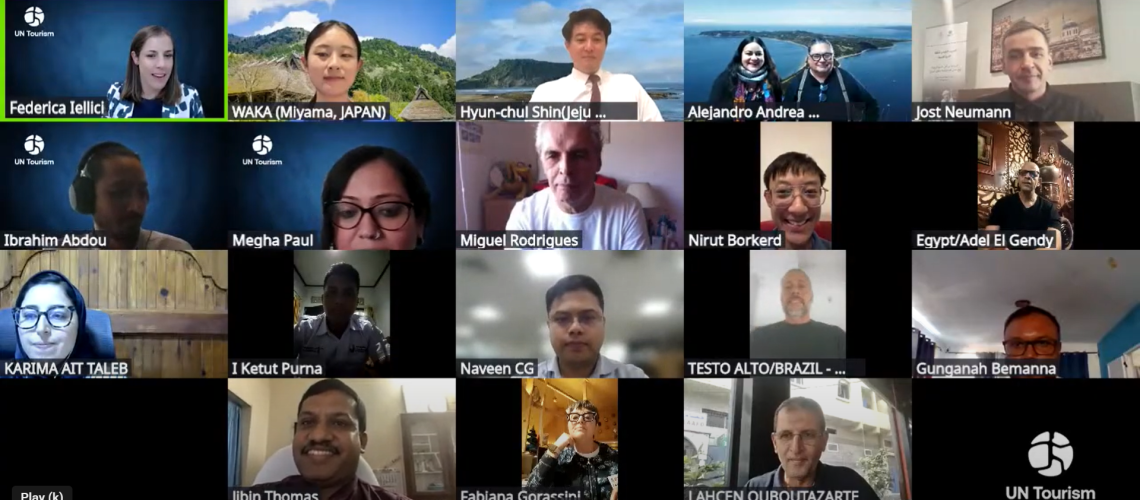
The Best Tourism Villages by UN Tourism Network recently held another edition of Village Talks, this time centered on the theme: “Cultivating Heritage: Agritourism Experiences from the Field.” The session explored how agritourism is emerging as a bridge between farming, culture, and tourism, generating livelihoods while safeguarding biodiversity and traditions.
Co-organized with the Food and Agriculture Organization (FAO), the webinar highlighted the synergies between the Best Tourism Villages initiative and FAO’s Globally Important Agricultural Heritage Systems (GIAHS) Programme. Together, they demonstrate how ancestral farming systems, when linked with tourism, can sustain communities and landscapes in innovative ways. The session gathered participants from across the BTV Network, rural municipalities, and partner institutions, offering an exchange of practical experiences and challenges from the ground.
Keynote speaker Aurélie Fernandez, Programme Specialist at the FAO GIAHS Secretariat, opened the session with an introduction to the GIAHS designation. She underlined how ancestral knowledge, biodiversity, and cultural landscapes enrich tourism offers and how agritourism, when anchored in these sites, safeguards traditional farming systems, connects to supportive policies, and strengthens rural livelihoods.
The session spotlighted four Best Tourism Villages from three countries — Chile, the Republic of Korea, and Japan — each presenting a distinct rural landscape and sharing firsthand how agritourism can safeguard heritage while creating new opportunities for communities.
Puqueldón, Chile – Women Farmers and Native Potatoes
Andrea Céspedes from Puqueldón highlighted how recognition as a Best Tourism Village has empowered the local community, supported heritage preservation, and brought global visibility to ongoing sustainability efforts. She shared how women farmers and cooperatives are leading initiatives such as the Ruta de la Papa Nativa and traditional Minga practices, linking biodiversity conservation with community pride and meaningful visitor experiences.
Dongbaek & Sehwa, Republic of Korea – Farming Innovation in Jeju’s Batdam System
Hyunchul Shin, Head of the Regional Tourism Team at the Jeju Tourism Organization, explained how Jeju’s Batdam GIAHS system underpins agritourism in the villages of Dongbaek and Sehwa. He showed how camellia oil farming in Dongbaek and carrot-based festivals and eco-programmes in Sehwa have transformed local crops and traditions into dynamic agritourism experiences. He also underscored the importance of the island’s volcanic stone walls in maintaining both farming identity and tourism appeal.
Miyama, Japan – Educational Farm Stays and Cultural Exchange
Waka Takamido, resident of Miyama and Executive Director of the Kyoto Miyama Tourism Association, described how the village has turned its preserved landscapes and thatched-roof houses into a hub for cultural exchange. She highlighted the success of the Educational Farm Stay Programme, which engaged more than 20 host families and generated USD 180,000 in 2023, with nearly 70% of the income distributed directly back to local households and businesses. The initiative, she noted, has diversified the local economy while fostering cultural exchange with overseas students.
The session emphasized that agritourism can only succeed with strong community participation, local ownership, and supportive policies. Village Talks continues to provide a global platform for member villages to share experiences and innovations from the ground, reinforcing that heritage and innovation can walk hand in hand in shaping the future of sustainable rural tourism.
Watch the highlights of the event here:
Explore the presentations shared during the session below:
For more updates and stories, follow our new LinkedIn page here: