

Asuka
Japan
Asuka
Japan
Asuka
Japan
Asuka
Japan
2025
Best Known For:
Cultural Heritage Promotion and Conservation
Economic Sustainability
Gastronomy
Contact
Nestled on the southeastern edge of the Nara Basin, just an hour from Kyoto and Osaka, Asuka Village embodies Japan’s timeless balance between history, nature, and community. Once the nation’s first capital during the 7th-century Asuka period, the village preserves an extraordinary legacy through 21 nationally designated historic sites, including imperial tombs, palace ruins, and ancient temples—15 of which are on Japan’s tentative World Heritage list. The village’s warm climate paints its rice fields, rivers, and forests with the beauty of all four seasons, creating a landscape that feels both sacred and alive. Protected by the Ancient Capitals Preservation Law and the Asuka Law, Asuka limits urban development to safeguard its traditional architecture and rural character. Visitors can hike through history with local guides, join rice farming or plant-dyeing workshops, and share in a community that continues to live in harmony with its past and natural surroundings.
HIGHLIGHTS
-

Guardians of Time – Preserving Asuka’s Ancient Landscape
Asuka Village stands as a living museum of Japan’s 7th-century origins. Under the Protection of Cultural Properties Law, the Ancient Capitals Preservation Law (1966), and the Asuka Law (1980), the village strictly regulates urban development to safeguard its rich archaeological and natural heritage. Rice fields ripple beside traditional houses, ancient tombs, and stone monuments—unchanged for centuries. This deliberate restraint has preserved one of Japan’s rare landscapes where history and daily life coexist seamlessly. The result is a cultural sanctuary that connects people to the nation’s beginnings while sustaining livelihoods through tourism rooted in conservation. As part of the World Heritage Route of the Kii Mountain Range, Asuka–Fujiwara (tentative list), and Nara, the village’s protection efforts extend beyond preservation—they foster community pride, environmental stewardship, and a shared responsibility to pass Japan’s living legacy to future generations.
-
Living and Learning in Heritage Spaces
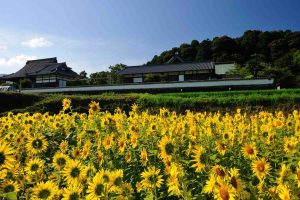
In Asuka, the past is not confined to monuments—it’s lived in. Through thoughtful restoration and creative reuse, the village transforms historical buildings into lodgings and restaurants, allowing guests to experience ancient Japan within authentic spaces. The “BRANCHERA VILLA,” for instance, breathes new life into a 150-year-old farmhouse registered as a national tangible cultural property. Managed with support from the local tourism association, such initiatives promote cultural continuity while stimulating sustainable rural tourism. Visitors can join hands-on experiences in agriculture, cooking, crafts, and traditional events, strengthening connections between locals and guests. This approach not only preserves architecture and heritage but also revitalizes the community economy. Asuka’s hospitality model proves that sustainability thrives when preservation meets participation—where staying overnight becomes a lesson in living history.
-
Savoring Asuka’s Culinary Heritage
Food is an expression of Asuka’s landscape and identity. The village promotes local gastronomy through three direct sales outlets that connect farmers and artisans directly with residents and visitors. Fields yield rice, vegetables, and fruits such as strawberries and mandarin oranges—each representing the village’s agricultural rhythm. The iconic “Asuka Nabe,” a comforting hot pot of chicken and seasonal vegetables simmered in dashi and milk, celebrates local ingredients with ancient flavors. Equally beloved is the “Asuka Ruby,” a vibrant strawberry that guests can pick fresh at local farms and enjoy as desserts in village eateries. These initiatives not only strengthen farm-to-table relationships but also reinforce sustainable livelihoods. By uniting producers, restaurants, and tourism stakeholders, Asuka Village nurtures a circular food culture—one where heritage, nature, and community come together to sustain both flavor and future.