
Huanggang Village
China
Huanggang Village
China
Huanggang Village
China
Huanggang Village
Chine
2025
Best Known For:
Cultural Heritage Promotion and Conservation
Economic Sustainability
Tourism Development and Destination Management
Contact
N/A
Where Songs Echo and Traditions Thrive in Harmony
Perched at 789 meters in southeastern Guizhou Province, this ancient Dong ethnic village carries over 800 years of history and cultural continuity. With 2,300 mu of terraced fields, 374 wooden homes, five drum towers, and more than 400 granaries, the village is revered as a “living architectural epic.” Its legacy comes alive through the Dong Grand Choir, an intangible cultural heritage of humanity passed down through generations. Festivals such as Hantian, praying for rain and harvest, and the Taiguanren Folk Parade vividly display vibrant folk traditions. The Rice-Fish-Duck co-culture system and traditional indigo dyeing techniques represent a thousand-year agricultural wisdom, maintained sustainably to this day. Through 18 Hecang Homestays and e-commerce, local products like glutinous rice and Dong cloth now reach markets beyond the mountains, increasing incomes fivefold in five years. Balancing the ancient Zhai Lao system with modern tourism, the community exemplifies how traditional governance and innovation can coexist, making this village a leading model for sustainable development rooted in heritage and resilience
HIGHLIGHTS
-
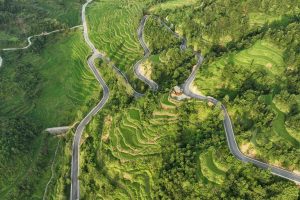
Sowing Prosperity with Shared Decisions
Innovation meets tradition through a community-led approach that transforms tourism into shared opportunity. The establishment of the Ancient Rice Tribe Rural Tourism Professional Cooperative allows villagers to participate equally in planning, operations and benefit distribution. This cooperative model puts decision-making power in local hands, ensuring that development aligns with cultural values and ecological sustainability. A key success is the transformation of the traditional Rice-Fish-Duck co-culture system into a tourism asset. Visitors can now witness and learn from this thousand-year practice, while local households enjoy an average income boost of USD 1,650 per year. Tourism is not outsourced but community-owned, empowering residents to shape their own future. This model turns heritage into livelihood, builds local capacity, and strengthens the social fabric through collaboration and pride. By integrating ancient agricultural systems into modern experiences, the village demonstrates how sustainable tourism can honor the past while creating inclusive economic growth for generations to come.
-
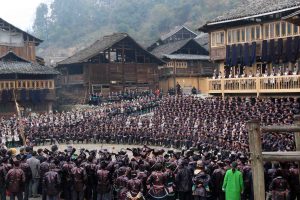
Teaching Nature the Traditional Way
Rooted in the landscape of a Globally Important Agricultural Heritage System, the village has developed powerful tools for environmental education through immersive, hands-on learning. Ecological literacy is promoted by designing study-tour products that merge natural heritage with cultural understanding. These courses invite participants to explore the interconnectedness of farming, ecology and tradition within the mountain ecosystem. Visitors become active learners and ambassadors for sustainability, carrying the village’s ecological wisdom far beyond its borders.
Through guided experiences in terraced rice paddies, fish ponds and duck habitats, participants gain a deep respect for the harmony between humans and nature. This approach directly supports conservation goals while contributing to quality education. By teaching ecological values through lived practice rather than theory alone, the village shapes a new generation of stewards committed to protecting fragile ecosystems. The program illustrates how education rooted in place and tradition can drive lasting environmental impact and global awareness.
-
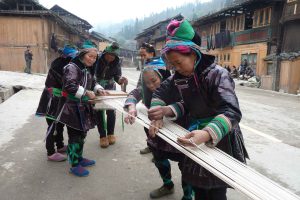
Voices of Heritage, Threads of Identity
Heritage here is not only preserved, it is lived, sung and passed forward. Through a strong commitment to cultural transmission, the village ensures that Dong language and arts remain part of daily life. Bilingual education in primary school supports the continuity of the ethnic language, while training sessions for Grand Song masters and embroidery artisans foster the next generation of cultural bearers. The Dong Grand Choir Singing Troupe, performing over 200 times annually, transforms intangible heritage into dynamic cultural capital. Embroidery workshops double as tourist attractions and training centers, giving visitors the chance to experience traditional craftsmanship firsthand. These living spaces embody a balance between preservation and participation, where culture is not a static display but a thriving practice. Women and youth play key roles in this revival, keeping traditions relevant while creating new economic opportunities. The result is a vibrant ecosystem where identity, education and tourism reinforce one another in sustainable harmony.