
Jikayi Village
China
Jikayi Village
China
Jikayi Village
China
Jikayi Village
China
2025
Best Known For:
Cultural Heritage Promotion and Conservation
Economic Sustainability
Social Inclusion and Empowerment
Contact
N/A
In the Clouds, Where Culture and Nature Breathe as One
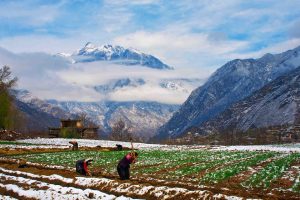
Tucked within Sichuan Province’s Danba County, this highland village lies in the heart of the Zang-Qiang-Yi Corridor, along the historic Tea-Horse Ancient Road and near globally significant ecological treasures like the UNESCO-listed Giant Panda Habitat. Known as the “Tibetan Village in the Clouds,” it boasts a canyon landscape and subtropical monsoon climate that support hundreds of endangered species, forming a rare plateau ecological-agricultural system. With 92 households and 408 residents, the village is a living archive of the ancient Dongnv (Queen of the East) Kingdom, famed for its 2,000-year-old Jiarong Tibetan watchtowers. Twenty-two towers remain in the village, reflecting yin-yang symmetry and feminine heritage, now on UNESCO’s Tentative World Heritage List. Agriculture and animal husbandry remain vibrant, with a rich variety of fruits and over 10 national and provincial intangible heritage items conserved. The village blends culture, ecology and tourism through homestays, forest school programs, immersive performances and Tibetan study tours. Women play leading roles, preserving traditions and driving innovation in tourism. Through inclusive, nature-based and heritage-rich tourism, the village sets a compelling example of sustainable rural revitalization where cultural memory and ecological stewardship thrive in unison.
HIGHLIGHTS
-
Living Her Legacy Through Culture and Craft
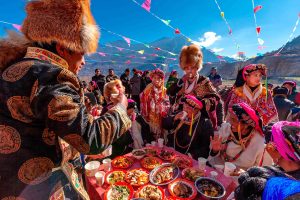
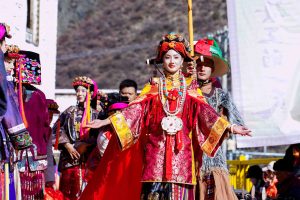
Women in this village are the heart of its cultural renewal. Empowered by the Dongnv (Queen of the East) heritage, they play central roles in preserving and promoting Jiarong Tibetan culture. Through performances like “One Day of the East Queen” and “Coming-of-Age Ceremonies under the Pear Blossoms,” women guide immersive storytelling experiences blending tradition and tourism. These performances integrate intangible cultural expressions such as folklore, seasonal festivals, and artisan crafts. Clay pottery making, woodblock printmaking, embroidery and other skills are not only displayed but also shared with visitors, creating rich, participatory cultural exchanges. Women lead these experiences with authenticity and pride, transmitting knowledge while generating income and fostering social cohesion. Their daily lives become living museums, turning ancestral practices into engaging tourism offerings. This model demonstrates the power of cultural preservation through active female participation, where women serve as artists, educators and entrepreneurs. It stands as a model for gender-inclusive, heritage-based sustainable tourism rooted in identity and resilience.
-
From Watchtowers to Welcome Homes
Heritage is not only preserved but reimagined through the creation of homestays and tourism spaces centered on the village’s iconic Jiarong Tibetan watchtowers. Built with ancient techniques and infused with Tibetan aesthetics, these structures now serve as both cultural landmarks and immersive lodging experiences. Residents have transformed traditional architecture into vibrant guesthouses, where the past becomes part of daily life. Female villagers, drawing on the deep connection between watchtowers and feminine heritage, offer specialized experiences such as Tibetan winemaking, pottery, and embroidery. These activities are not staged performances, but authentic exchanges woven into everyday living. Through study tours, guests can explore watchtower preservation, heritage interpretation and even homestay management. The result is a seamless blend of cultural education, community engagement and responsible tourism. This initiative empowers residents, particularly women, while preserving architectural and intangible heritage. It offers visitors meaningful interaction with living traditions and ensures cultural continuity through innovative tourism practices.
-
Growing a Global Classroom in the Forest
Blending ecological conservation with cultural heritage, the Denglong Yunhe Forest School has transformed the village into an international model for community-led education. This creative program uses local forests, architecture and traditions as the foundation for experiential learning. Built with UNESCO recognition, the school invites students from around the world to take part in hands-on, observation-based programs. Guided by villagers and intangible heritage inheritors, learners explore topics like watchtower restoration, forest guardianship, water system revitalization and Tibetan dwelling design. The curriculum follows a unique “observe–learn–practice–share” model that connects theory with local realities. This initiative turns the village into a dynamic, open-air classroom where culture and ecology are co-taught through lived experience. It supports youth education, cultural transmission and global exchange, while placing community knowledge at the center. More than an academic program, it is a sustainable tourism model that builds pride, capacity and international collaboration rooted in place and people.